Start in Monterey
Join California Route 1 in Monterey (
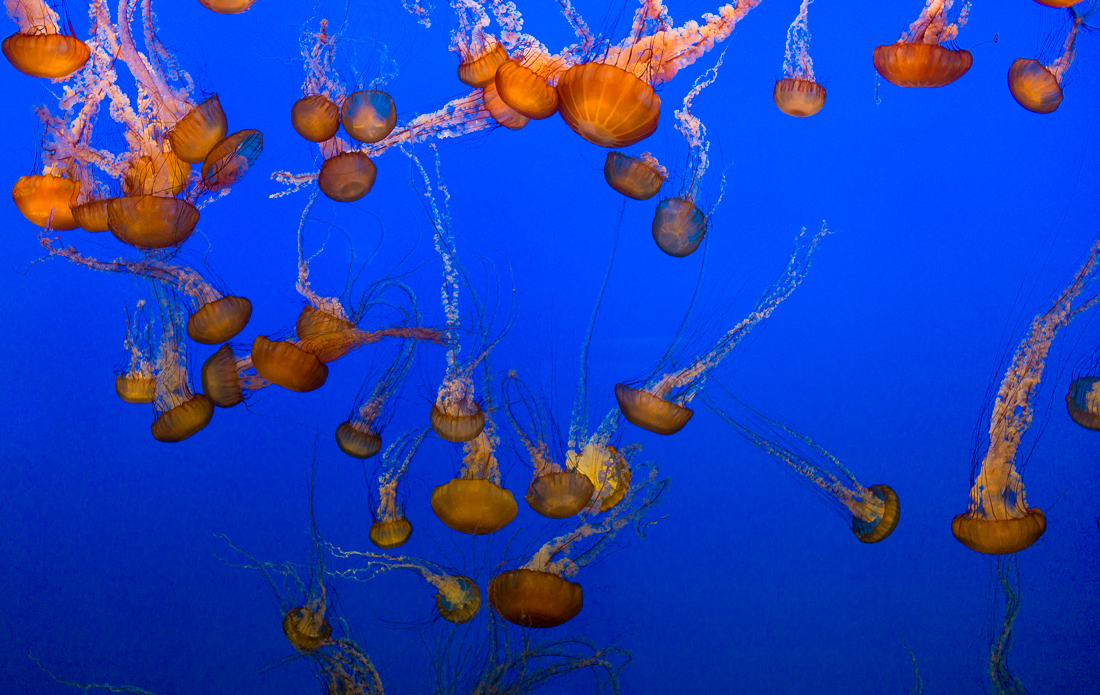
www.montereyinfo.org.). The town served as California's capital under Spanish, Mexican, and American flags, and by the early 1900s boasted an important sardine industry. Surviving sites include the Royal Presidio Chapel, Monterey State Historic Park, Custom House, Casa Soberanes, Larkin House, and other adobe buildings, as well as touristy Fisherman's Wharf and Cannery Row, home of the celebrated Monterey Bay Aquarium (
www.montereybayaquarium.org).
Carmel-by-the-Sea
After enjoying Monterey, drive 3 miles south on Highway 1 to Carmel-by-the-Sea;
www.carmelcalifornia.org), an upscale village of quaint colorful cottages, restaurants, inns, shops, and art galleries fronted by a broad beach fringed with Monterey pines. Among the highlights are Mission San Carlos Borroméo del Río Carmelo, second of the California missions, founded by Padre Junípero Serra in 1770; Tor House, the 1919 home of poet Robinson Jeffers; and mile-long Carmel River State Beach with its pelicans and kingfishers.
Point Lobos State Reserve
From Carmel drive 3.5 miles south to Point Lobos State Reserve;
www.pointlobos.org, a 550-acre park encompassing coves, headlands, meadows, tide pools, and the nation's first undersea ecological reserve, covering an additional 750 acres, with kelp forests 70 feet high. Trails lead past Monterey cypresses, which grow naturally only here and in Pebble Beach. The park's 250 species of birds and mammals include black-tailed deer, gray foxes, sea otters, and sea lions. Migrating gray whales pass by from December through April.
Big Sur
After driving through Carmel Highlands, where impressive houses perch on granite cliffs above the sea, you reach the start of Big Sur, which extends 90 miles south to San Simeon. On this fabled coastline, redwood groves reach skyward, the Santa Lucia Range plunges into the sea, and waves are beaten to froth on ragged rocks. It's a place of elemental power that can make human affairs seem inconsequential.
Garrapata State Park
Route 1, opened in 1937, climbs higher than 1,000 feet above the sea. One of the few easy-to-reach beaches is at Garrapata State Park;
www.parks.ca.gov/?page_id=579), about 2 miles south of Carmel Highlands. From Soberanes Point watch for sea otters, which are protected under California state law.
Old Coast Road
En route to Bixby Bridge, six miles farther, you can choose to leave Calif. 1 and drive the 11-mile Old Coast Road, which climbs through remote forests and canyons and offers silent ocean views before ending at Andrew Molera State Park (
www.parks.ca.gov/?page_id=582). The unpaved road is tortuous and impassable when it rains.
Bixby Bridge
Much photographed Bixby Bridge is a single-span concrete arch more than 260 feet high and 700 feet long. Park at turnouts near either end to gawk or take pictures. Ahead, the highway passes Hurricane Point, a place of big winds and big views, and then descends to the mouth of the Little Sur River. Looking inland, you'll see 3,709-foot-high Pico Blanco, distinguishable by its lime deposits. Toward the sea, sand dunes soon appear, rolling toward the 1889 Point Sur Lighthouse; tours Saturdays and Sundays, call for additional days April through October;
www.pointsur.org), a state historic park. In a few miles you reach Andrew Molera State Park (
www.parks.ca.gov/?page_id=582), whose broad beach, oak and redwood forests, and stretch of the Big Sur River are accessible only by foot.
Pfeiffer Big Sur State Park
Pass through the settlement of Big Sur, which offers food and lodging, and head for Pfeiffer Big Sur State Park (
www.parks.ca.gov/?page_id=570), where the Big Sur River runs through 964 acres of redwoods, sycamores, and ferns. Then go 1.5 miles south and turn right on the 2-mile road down Sycamore Canyon Road to the white sands of Pfeiffer Beach, where the surf roars through arched rocks.
Nepenthe
Less than 2 miles farther on the highway you come to Nepenthe (
www.nepenthebigsur.com), an indoor-outdoor restaurant perched 800 feet above the sea and famous for its views. About half a mile south, on the left, look for the Henry Miller Memorial Library (
www.henrymiller.org), perched among towering redwoods. It displays books and memorabilia of the novelist who spent 18 years in Big Sur. Also stop 8 miles farther at Julia Pfeiffer Burns State Park (
www.parks.ca.gov/?page_id=578), whose terrain ranges from 3,000-foot-high ridges to an underwater preserve. Do walk the short trail along the seaside bluff to see McWay Falls pour 100 feet into a picturesque cove.
Lucia, Plaskett, Gorda, and Ragged Point
Ahead of you lies the southern stretch of Big Sur. The road clings to a precipitous coastline, and the only settlements in the next 40 miles are Lucia, Plaskett, Gorda, and Ragged Point. From here onward are hills and pastureland. You'll spy the Piedras Blancas Light Station on a point supposedly named in 1542 by Spanish explorer Juan Rodríguez Cabrillo for its white rocks (stained with bird droppings).
San Simeon
After a spell away from the Pacific, the road reaches the town of San Simeon, a staging area for the five-mile bus ride to Hearst Castle (
www.hearstcastle.org), begun in 1919 by newspaperman William Randolph Hearst. Perched in the Santa Lucia Range, the 127-acre estate features the 115-room main house and guesthouses, which mix classical and Mediterranean Revival styles, using European architectural elements, antiques, and artwork collected by Hearst.
Text from National Graphic
Images by:
Leica M9 35mm Summicron
@ 2013 Photo Pro - Jeffrey P. Hopp